Hooper's Excavation & Demolition

Grade Work: The Difference Between Dirt and Done

Final grade around new construction, regrading yards that hold water, laser-flat pads and floors — grading is where a project either finishes right or gets lived with. We hold grade tight and always leave water a way out.

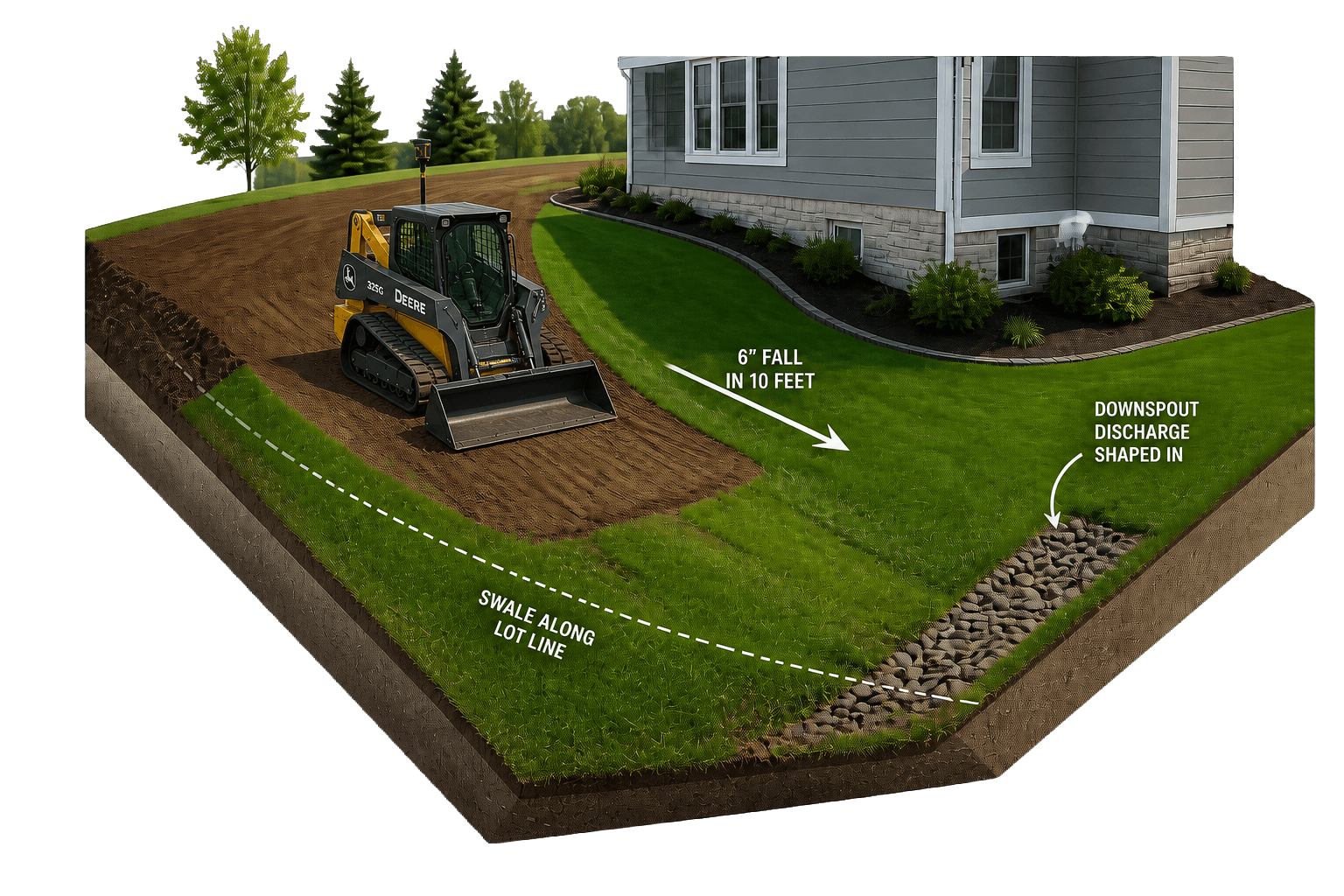
Grading illustration

Everything rides on grade

Water in the crawlspace, ice on the sidewalk, a yard you can't mow without scalping — all grading problems. Good grade work is measured in inches and planned in slopes: fall away from the house, swales that carry water between properties, transitions that mow clean. It's the least glamorous work we do and the most noticed when it's wrong.

Hooper's Excavation and Demolition does final grade for new builds, corrective regrading for established properties, and laser grading where flat actually has to mean flat.

Grading services

  • Final grade for new construction — shaping the lot after the builders leave, ready for seed or sod.
  • Corrective regrading — fixing yards that pond, slope toward the house, or eroded over the years.
  • Laser grading — pads, barn floors, and arenas graded to tight tolerance.
  • Swales and crowns — putting shape into ground so water moves where it should.
  • Topsoil respread — finishing with real growing medium, not compacted clay with paint-thin dressing.

Final grade on new builds

Builders' rough grade is not a finished yard. Final grade means positive slope off every wall (6 inches of fall in the first 10 feet is the standard), downspout and sump discharge shaped in, swales established along lot lines, and 4 to 6 inches of topsoil where grass is supposed to live. Done right, your yard drains, grows, and mows correctly for as long as you own the house.

Permits, by County

We pull the permits on most jobs — these links show where each county's rules live for the approvals this kind of work usually touches. Exact requirements depend on the parcel.

Inside city or town limits, municipal rules often replace or add to these county resources — several towns run their own building, driveway, and stormwater programs. Check your address to see the exact authority and contacts for your parcel.

Statewide: the IDEM Construction Stormwater General Permit (CSGP) applies to any site disturbing an acre or more — or less than an acre when the work is part of a larger common plan of development.

Frequently Asked Questions

How much does regrading a yard cost?+

Small corrective grading is usually very cost effective. Full-yard regrades with topsoil heavily depend on size and how much material moves. Final grade on new construction is usually quoted with topsoil and prep for seeding.

How much slope should there be away from my house?+

The standard is 6 inches of fall in the first 10 feet from the foundation, then at least gentle continued fall to a swale or drainage path. Flat is not good enough — flat ground next to a foundation ends up sloping backward after the first few years of settling.

Will grading fix the standing water in my yard?+

If water has somewhere to go, yes — regrading and swales solve most ponding. If the whole property is a low spot, grading gets paired with buried drainage to an outlet. We shoot elevations first and tell you which situation you have.

When is the best time of year for grade work?+

Late spring through fall, when ground is workable and seed can establish. Fall grading with dormant seeding works well too. We avoid working saturated clay — grading mud makes hardpan and ruts, and you pay for work that has to be redone.

Ready to break ground?

Serving Central Indiana from Arcadia. Straight answers, real equipment, done right.