Hooper's Excavation & Demolition

Drainage Solutions That Actually Move Water

Standing water in the yard, a crawlspace that never dries, a field that drowns every spring — water problems don't fix themselves. We design and build drainage that works with Indiana's clay and flat ground: French drains, regrading, swales, downspout systems, and farm tile.

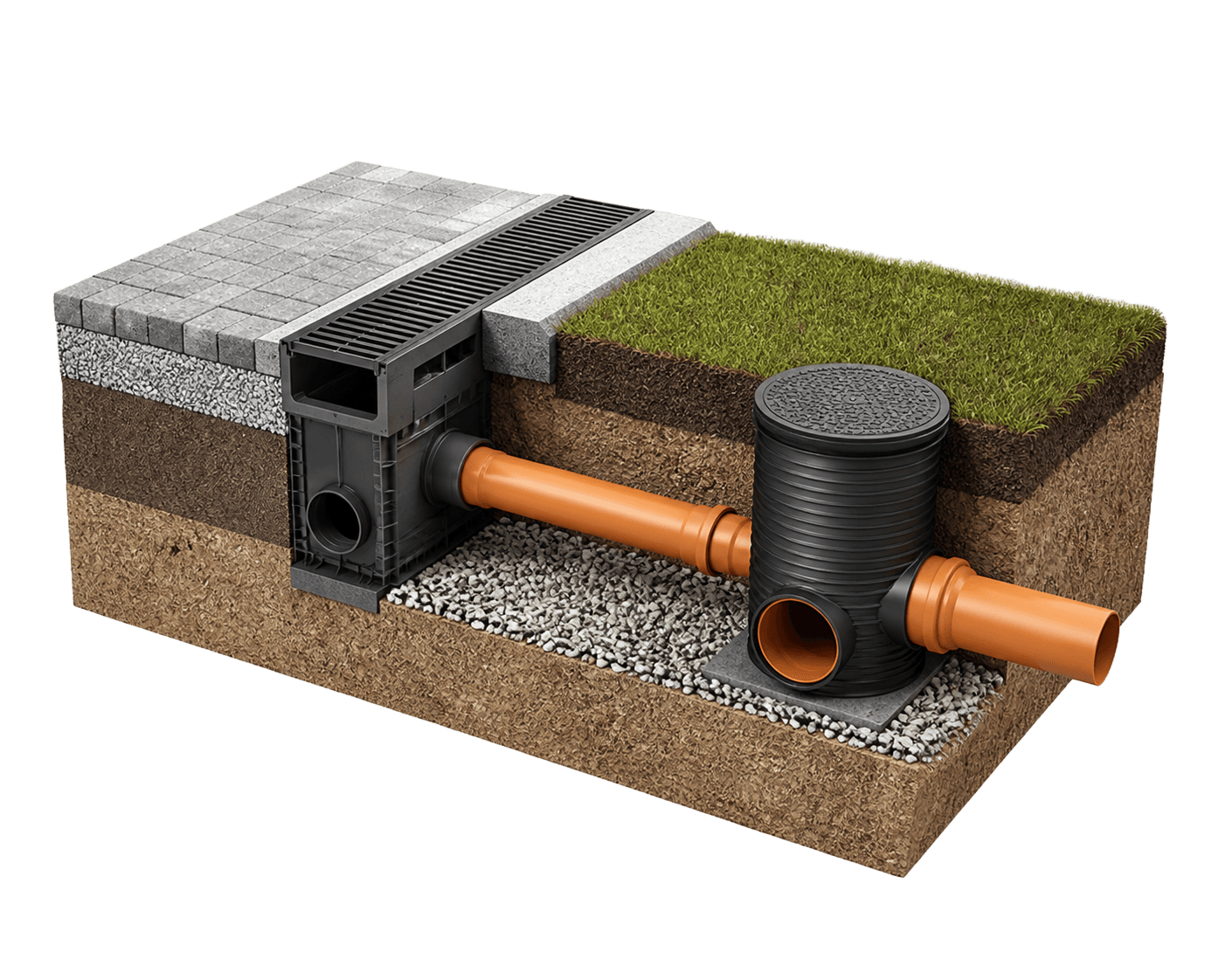
Drainage Installation illustration

Water always wins — unless you give it somewhere to go

Most of Central Indiana was farmland for a reason: flat ground and heavy clay that holds water. That same geology is why so many yards in Hamilton, Tipton, and Madison counties turn into ponds every spring. Surface fixes and box-store gimmicks don't change the physics. Grading, collection, and a real outlet do.

Hooper's Excavation and Demolition designs and installs drainage for homeowners, builders, and farms — from a single soggy side yard to complete field tile systems. We start with grades and end with water leaving your property the way it should.

Drainage work we do

  • French drains & curtain drains — subsurface collection with proper gravel bedding, fabric, and fall.
  • Yard regrading & swales — reshaping the ground so surface water moves instead of pooling.
  • Downspout & sump discharge tie-ins — buried lines that carry roof and sump water to daylight, not your foundation.
  • Foundation & crawlspace drainage — exterior solutions for chronic wet basements and crawlspaces.
  • Farm field tile — new tile installation, repairs, blowout fixes, and main tie-ins.
  • Pond overflows & outlet structures — controlled ways for water to leave when it needs to.
  • Driveway & culvert drainage — crossings and culverts sized for real storm flow.

How we approach a drainage problem

1. Walk it wet, if we can

The best time to diagnose drainage is when it's misbehaving. We look at where water stands, where it comes from, and — most important — where it can legally and practically go. No outlet, no drainage system. That's the first question, always.

2. Shoot the grades

Water moves on fall. We measure actual elevations rather than eyeballing it, because an inch of fall over a hundred feet is the difference between a working drain and an expensive trench of gravel.

3. Build the fix

Sometimes it's a day with the mini excavator and a downspout line. Sometimes it's regrading half the yard with the dozer and burying two hundred feet of pipe. We size the fix to the problem — and we'll tell you plainly when the cheap version is good enough.

County drains and regulated work

A lot of Central Indiana drainage eventually touches a county regulated drain or a legal tile main. Work near those is regulated through the county surveyor's office. We know the process in the counties we serve and coordinate the paperwork, so your project doesn't become a problem later.

Frequently Asked Questions

How much does yard drainage work cost in Central Indiana?+

Small fixes like a downspout tie-in or a short French drain are usually very affordable. Whole-yard solutions with regrading, swales, and buried drainage can be significantly more. Farm field tile is priced per foot and scale changes everything. We quote after walking the property — water problems are cheap to diagnose in person and expensive to guess at.

Why is my yard always wet? +

Central Indiana sits on flat terrain and heavy clay soil that drains slowly by nature. Add a low spot, a neighbor uphill, or downspouts dumping at the foundation, and water has nowhere to go. The fix is almost always some combination of grading (moving the water), collection (catching it), and conveyance (piping it somewhere legal and sensible).

What is a French drain and do I need one?+

A French drain is a gravel-bedded perforated pipe that collects subsurface water and moves it away. It is the right tool for soggy lawns and wet foundations — but only if it has a proper outlet and enough fall. A French drain without fall is a buried bathtub. We check grades first, then recommend.

Can you fix water coming into my basement or crawlspace?+

Often, yes — from the outside, which is where the problem usually starts. Regrading so the ground slopes away from the foundation, capturing roof water, and intercepting subsurface flow with drainage solves most chronic wet-basement and wet-crawlspace problems without touching the inside.

Do you install farm drainage tile?+

Yes. We install and repair agricultural field tile, fix blowouts, and tie into existing mains. If your project involves a county regulated drain, we coordinate with the county surveyor’s office so the work is done right and documented.

Who is responsible for drainage problems from a neighboring property?+

Indiana follows a common-enemy doctrine with limits: landowners generally must not concentrate and discharge water onto a neighbor. County regulated drains, easements, and local ordinances complicate individual cases. We will tell you what is physically happening on your site and what the practical fix is; for legal disputes you want an attorney.

Ready to break ground?

Serving Central Indiana from Arcadia. Straight answers, real equipment, done right.